
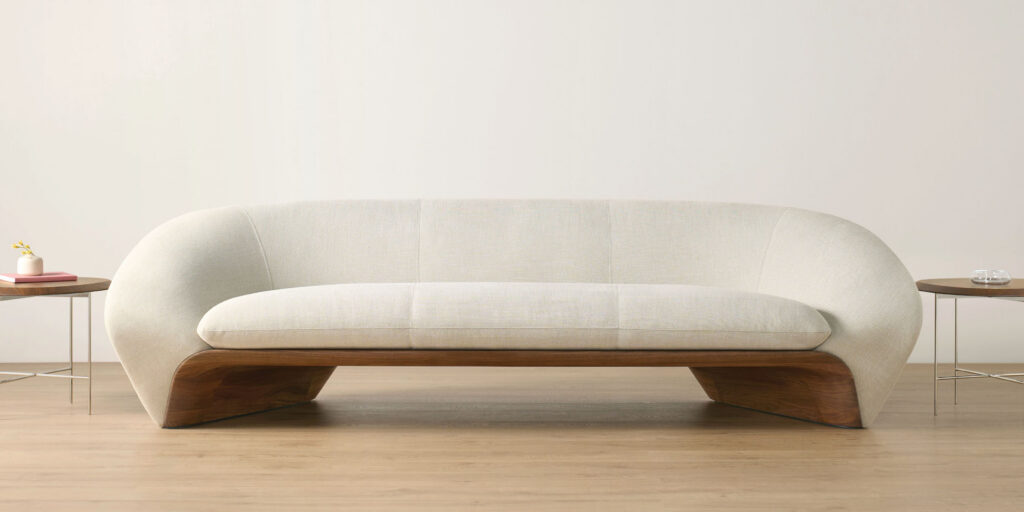
PIECE OF THE MONTH: Crews — Bernhardt Design × Terry Crews
Yes, that Terry Crews.
Before the NFL, Brooklyn Nine-Nine, White Chicks and Hollywood, Terry Crews was an artist.
Growing up in Flint, Michigan, Crews earned an art scholarship to Interlochen Center for the Arts, followed by an Art Excellence scholarship and an athletic scholarship at Western Michigan University. Art stayed with him even as football became his career. During his years in the NFL, he painted portraits of teammates to supplement his income.
It is a part of his story that makes his work with Bernhardt Design feel considerably less surprising.
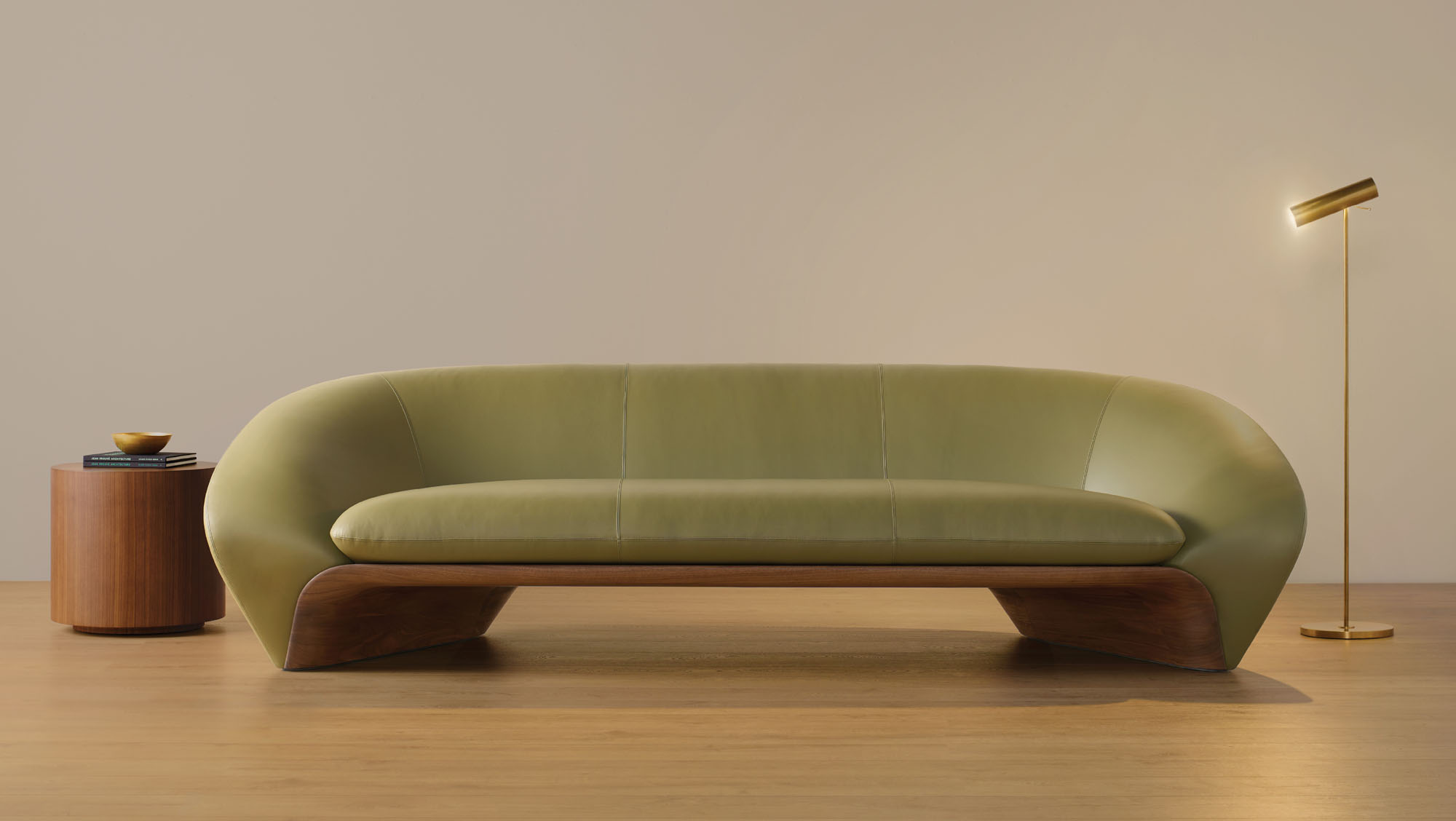
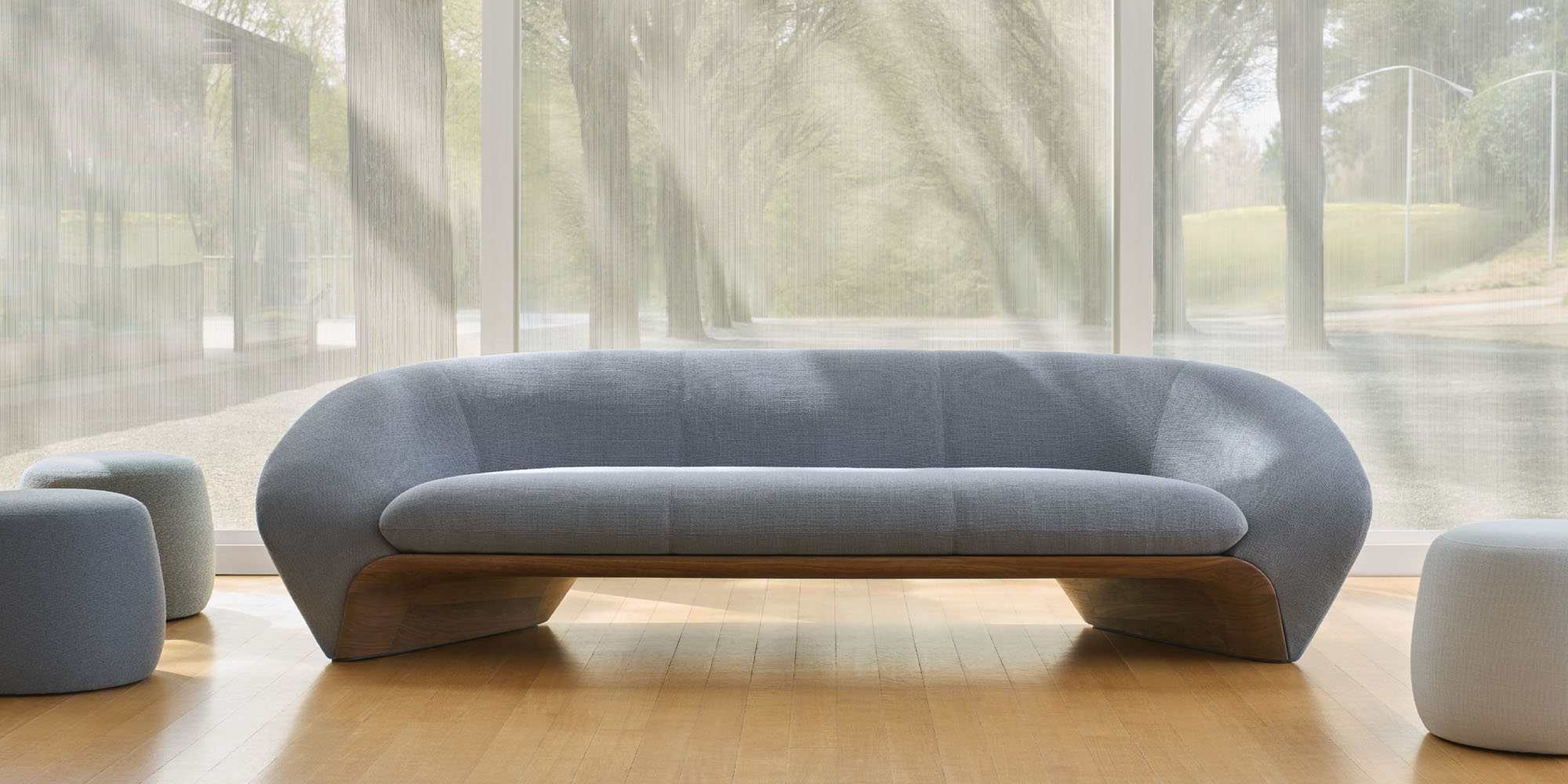
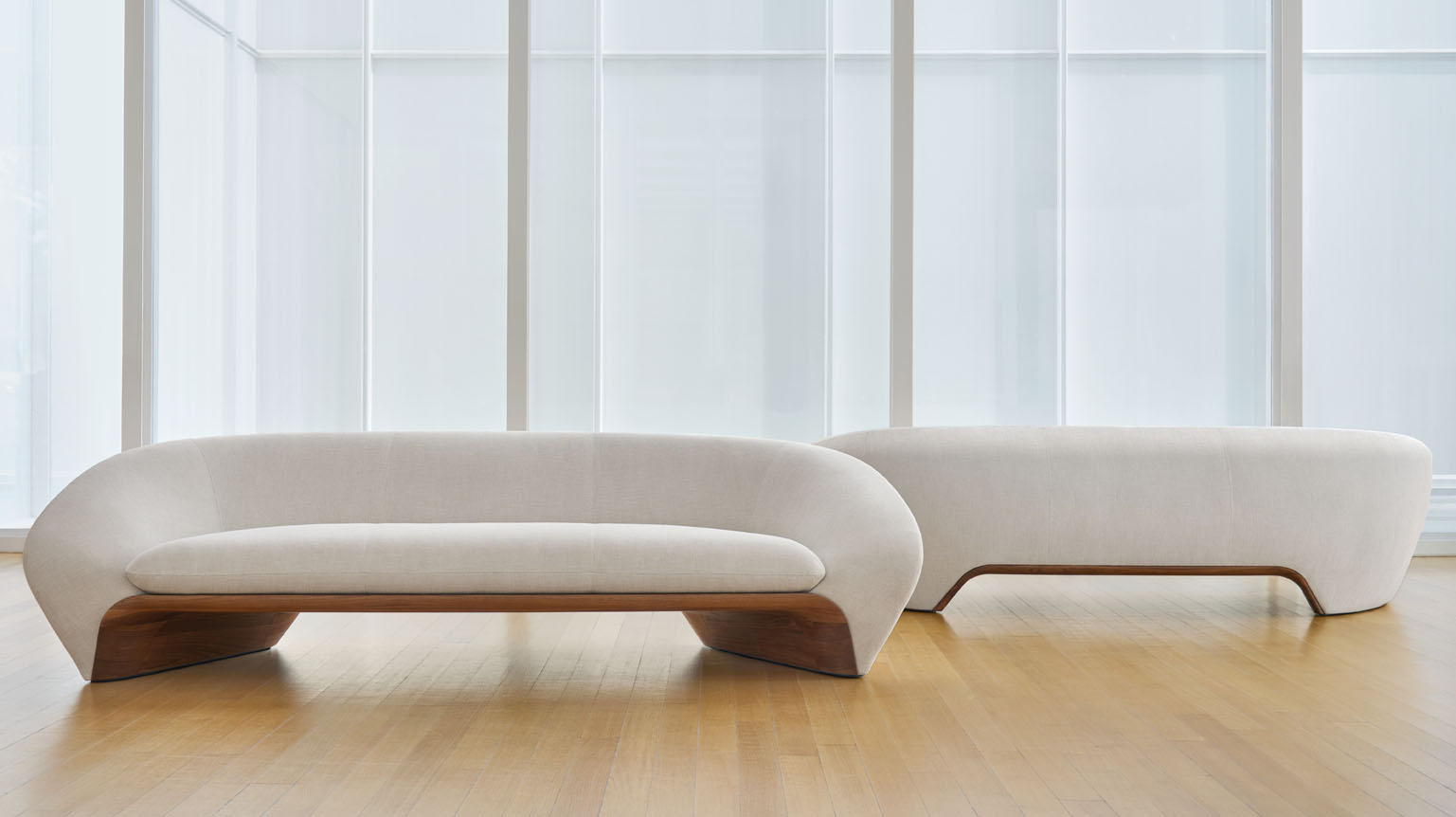
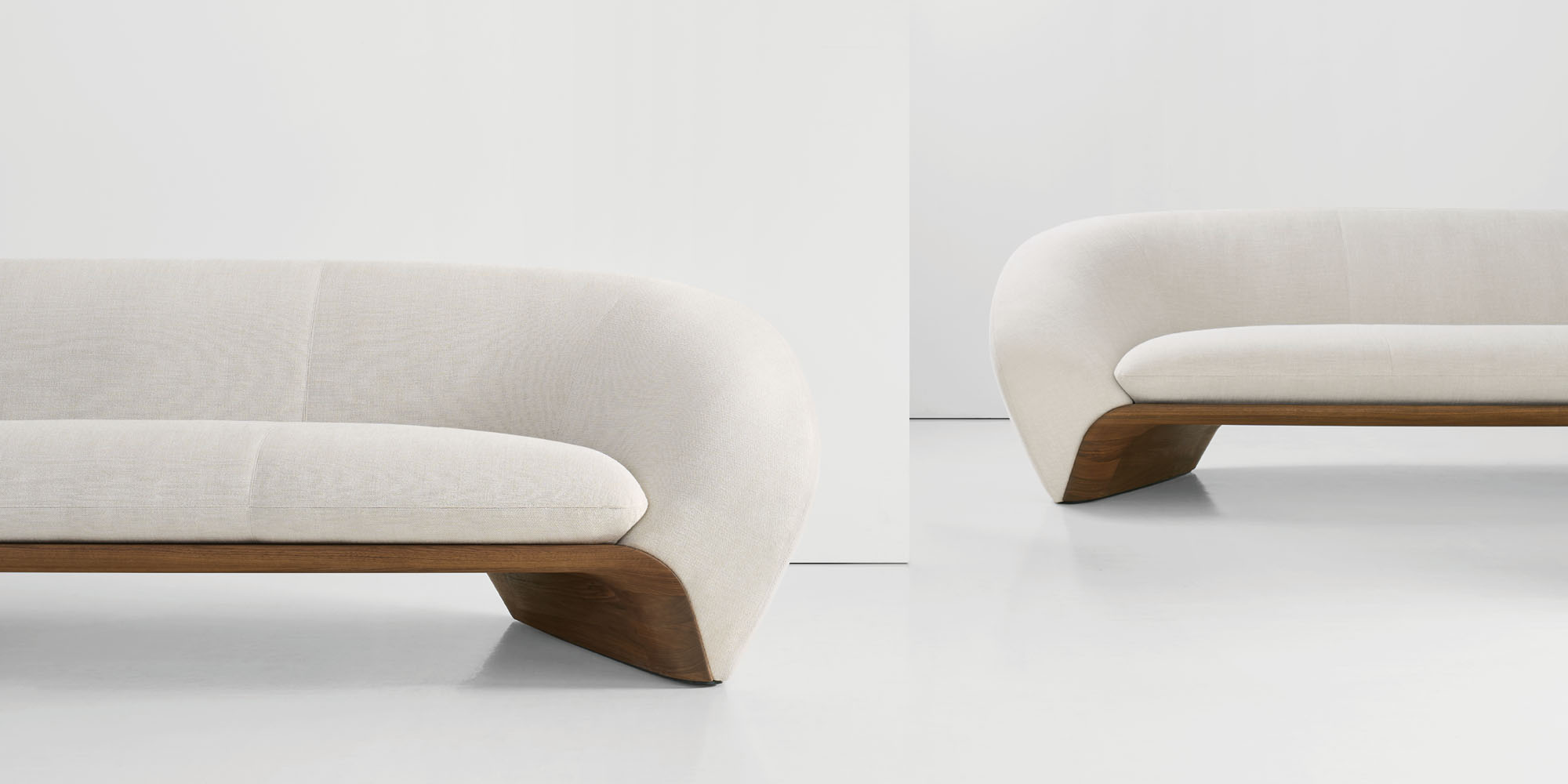
His latest piece, Crews, is a three-seat sofa inspired by another of his interests: performance automobiles. A carved solid-walnut frame supports and suspends generous upholstered cushions, while sweeping lines and a forward-leaning profile give the sofa a sense of movement.
Even at rest, it feels like it’s in motion.
THE DESIGNER
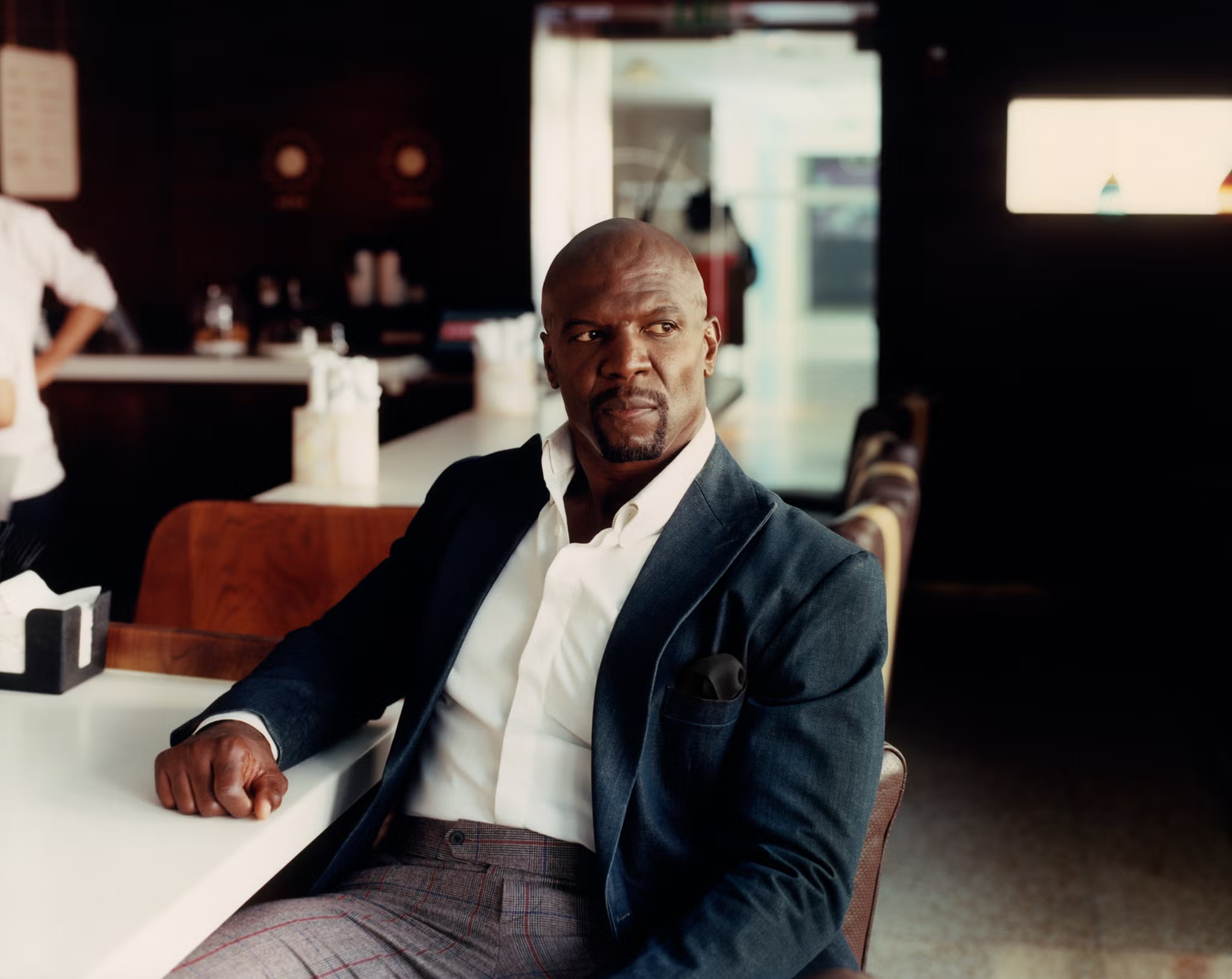
Terry Crews has moved between creative disciplines for most of his life.
Drawing and painting came first, followed by football, acting, writing and entertainment. His interest in visual art eventually expanded into design with AMEN & AMEN, a creative company established by Crews to work across art, fashion, music, décor and industrial design.
In 2016, AMEN & AMEN presented Ini Archibong’s The Secret Garden collection of furniture and lighting in Milan. Crews later began designing furniture himself, developing an ongoing relationship with Bernhardt Design.
His earlier Terry Crews Collection included the Ibis sofa, Lily chair, Aire benches and Float tables. For that work, Crews looked to designers including Le Corbusier, Eero Saarinen, Paul McCobb, and Charles and Ray Eames before finding inspiration somewhere further back: ancient Egypt.
He imagined what contemporary furniture might look like if ancient Egyptian culture had continued to shape the modern world. The Nile became a recurring reference. Ibis took its form from the sacred bird associated with ancient Egypt, while the organic shapes of the Float tables were inspired by smooth stones shaped by the river.
The references reveal something about the way Crews approaches design. He starts with a question, follows it somewhere unexpected, and lets the object develop from there.
“The interplay between the solidity of the wood and the lightness of the cushions creates a refined tension.”
THE INSPIRATION
For Crews, the starting point is personal.
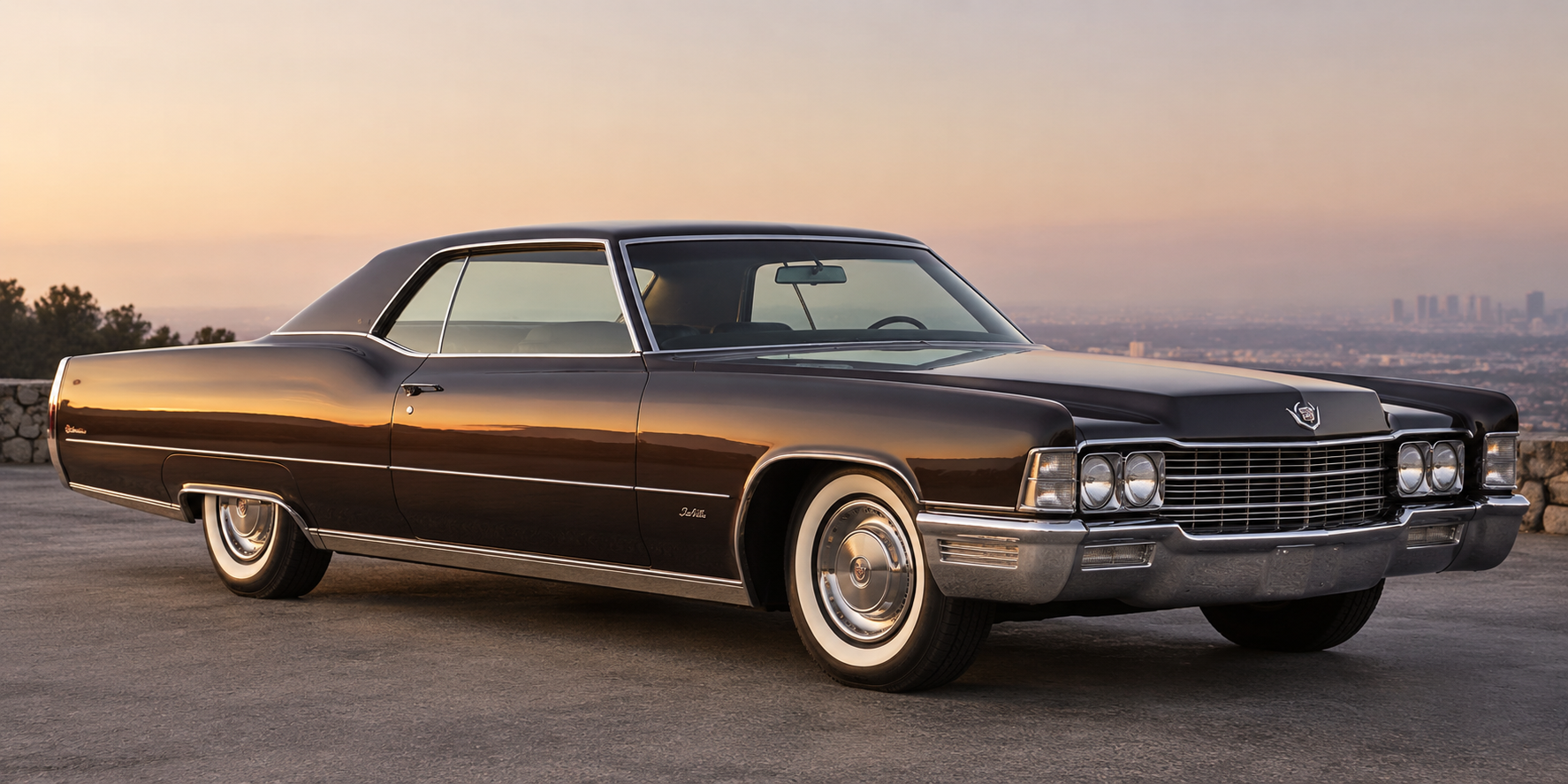
Growing up, Terry Crews remembers his grandfather’s Cadillac. Saturdays were spent washing and polishing the car, down to its whitewall tires, before his grandparents dressed for an evening out. For Crews, the Cadillac came to represent something larger: craftsmanship, presence and a particular idea of having arrived.
Those memories found their way into the Crews sofa. Inspired by automotive design, its long profile, sweeping upholstered forms and exposed walnut frame give the piece a sense of movement and weight. The structure feels precise, while the cushions bring softness and volume.
There is movement in the form without the automotive reference becoming literal. Instead, Crews captures the feeling of an object shaped to move.
THE RECOGNITION
The design has already received attention within the industry.
At ICFF 2026, Bernhardt Design received the Editors Award for Furniture, with ICFF identifying Terry Crews’ sofa as the winning design. At NeoCon 2026, Crews received Silver in the Seating: Sofas & Lounge category of the Best of NeoCon Awards.
For someone whose public career has taken him through professional sports, film, television and writing, the recognition adds another dimension to a creative practice that began long before any of them.
THE MATERIAL
The solid-walnut frame is where much of the character of Crews lives.
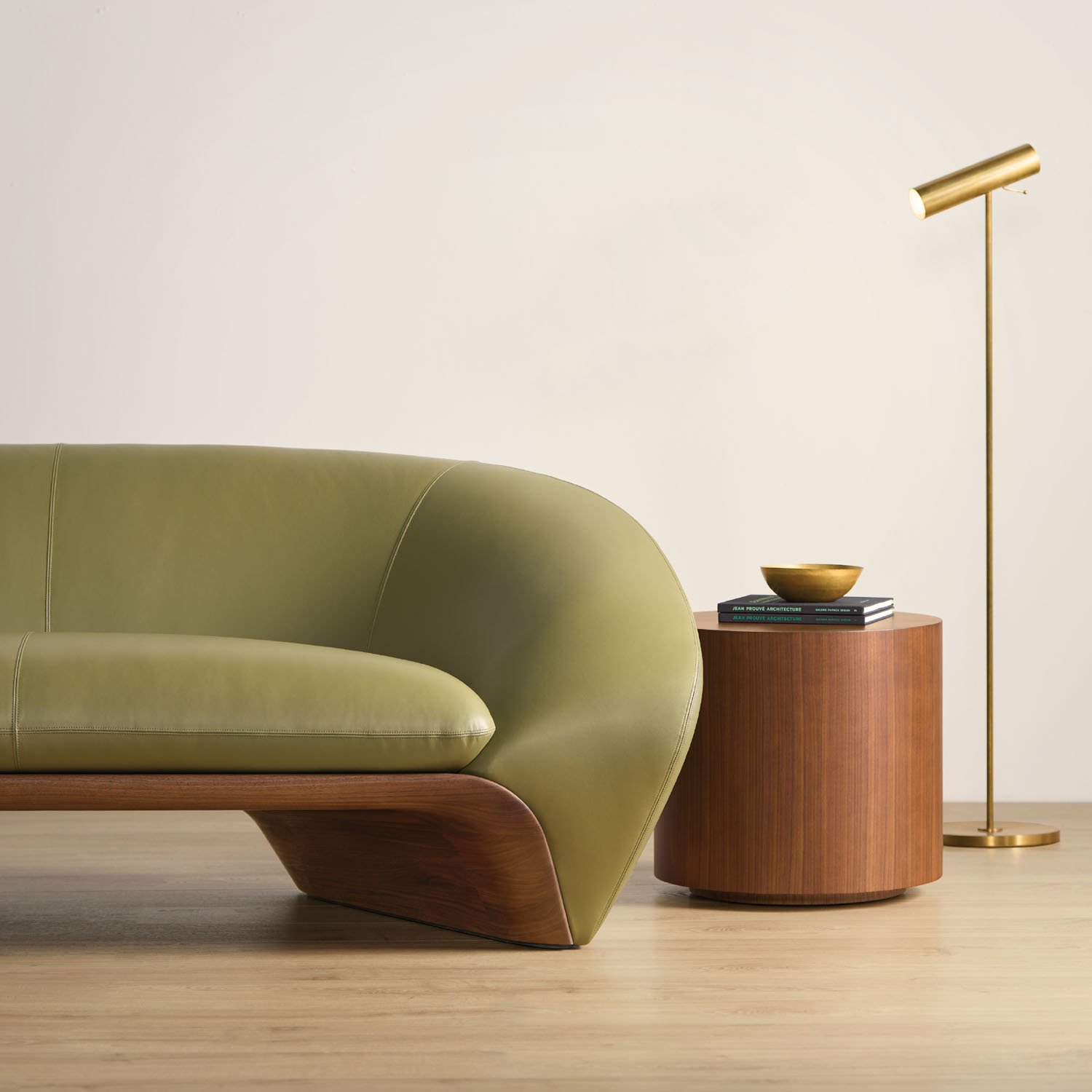
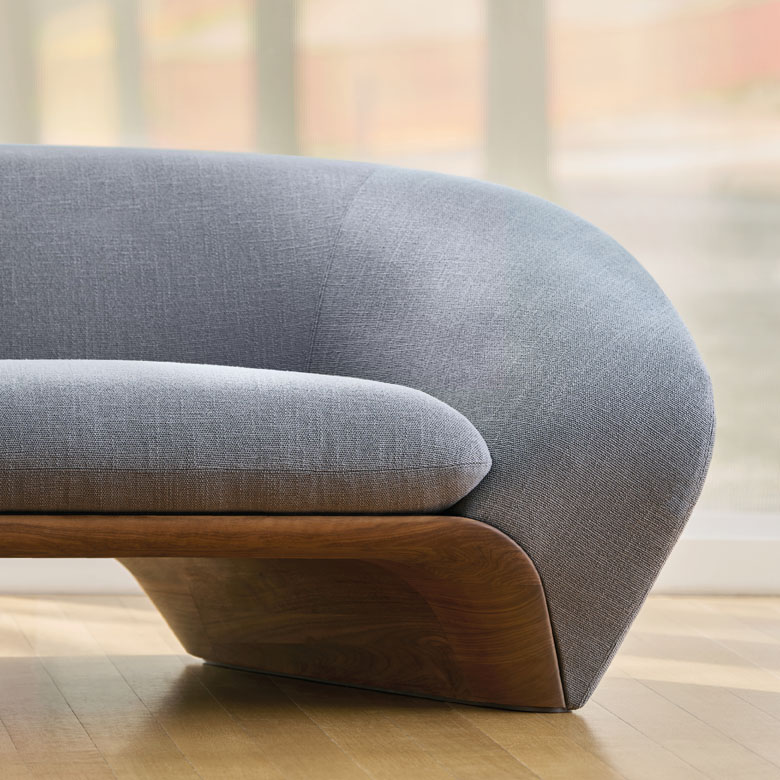
Carved to remain visible from every angle, the frame acts as both structure and defining visual element. It travels beneath and around the upholstered cushions, making the back and sides of the sofa as considered as the front.
That matters in the kinds of spaces where a piece like this can live. In a lounge, reception area or open workplace setting, furniture is often approached from multiple directions. Crews has enough presence to anchor the room while allowing its construction to become part of what you see.
Inside the frame, plush seat and back cushions are constructed with multi-density foam and finished with saddle stitching. Contrasting textiles can also be specified between the seat and back, adding another layer of expression to the piece.
THE EVOLUTION
Crews is especially interesting when viewed alongside Terry Crews’ earlier furniture.
His references have moved from the modernists he admired, to ancient Egypt and the landscape of the Nile, and now to the lines of performance automobiles.
The source material changes. The curiosity stays remarkably consistent.
For Crews, furniture becomes a place where seemingly unrelated interests can meet: art, craftsmanship, popular culture, history, engineering and movement. The result feels personal without requiring the backstory to understand it.
You can simply look at the sofa and see the idea.
WHY WE LIKE IT
There is an obvious reason Terry Crews designing furniture gets your attention.
Stay with the story a little longer and the surprise begins to disappear.
The teenager from Flint with an art scholarship became the NFL player painting portraits of his teammates, then the actor building a design house, studying furniture history and developing collections of his own.
Crews brings that history into a single object. The walnut frame carries the precision of a performance car. The upholstery brings comfort and generosity. The profile gives the entire piece a sense of movement.
Terry Crews has spent a career reinventing himself.
Crews makes the case that design has been there all along.

